Underground Water Line Leak Detection in Elizabethtown
For water line leak detection Elizabethtown homeowners who suspect a hidden leak, the meter test is step one. We connect you with local pros whose listening and tracing equipment pinpoints the exact spot, so repairs dig once, in the right place. Call (223) 243-0253 any time for help.
Serving Elizabethtown, PA, calls answered 24/7
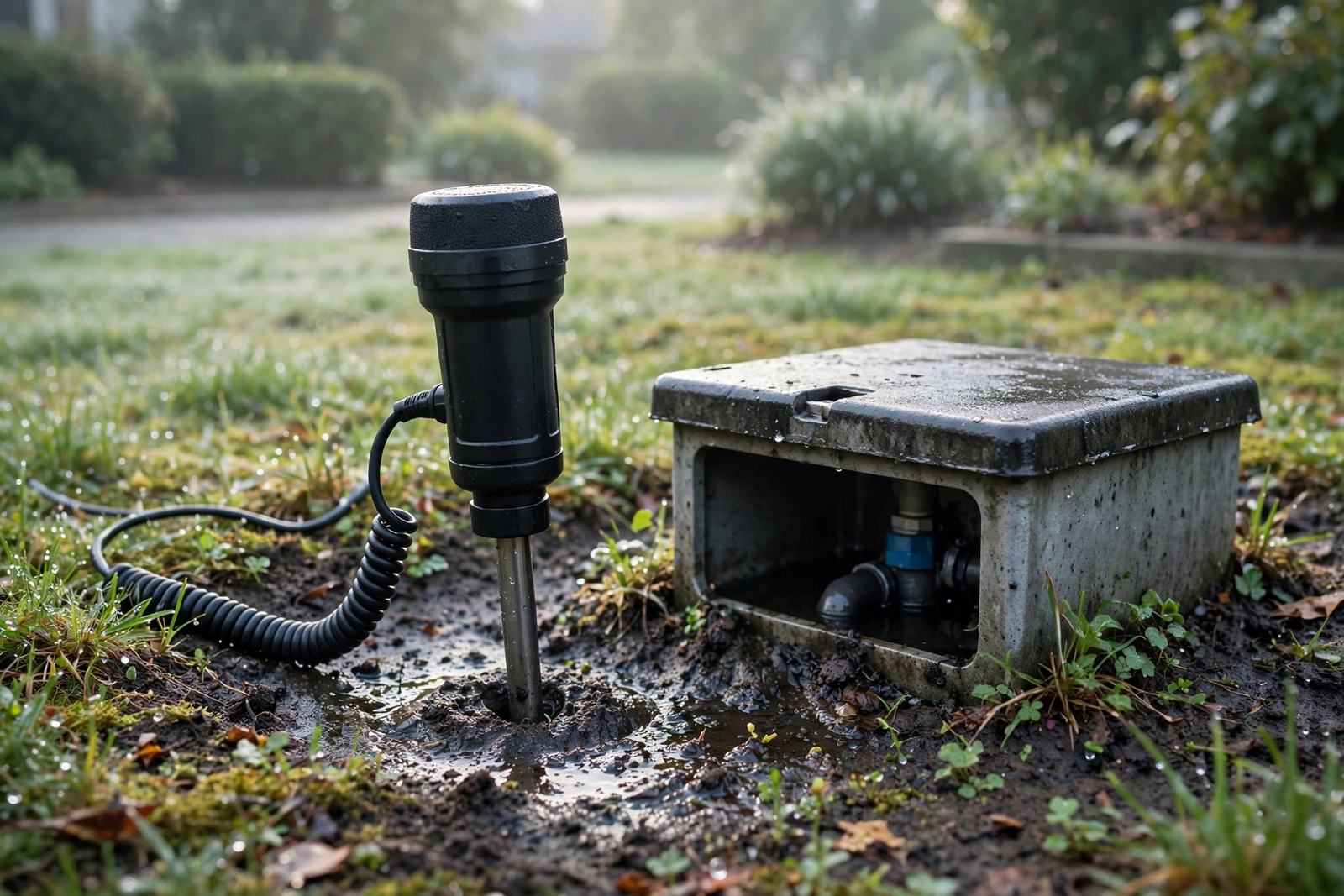
The Elizabethtown water line leak detection meter test, step by step
Suspect a hidden leak? Here is what to do right now, before you call anyone. Make sure no water is running anywhere in the house: no laundry, no dishwasher, no toilets refilling, no hose running outside. Then find your water meter, usually in a pit near the curb, and watch the dial or the low-flow indicator.
- Turn off every tap, appliance and hose bibb in and around the house.
- Open the meter pit carefully and watch the dial for several minutes.
- If the dial moves or the low-flow triangle spins, water is going somewhere it should not.
- Note what you see, close the pit and call (223) 243-0253.
That test is the one check worth doing yourself, and it tells a pro a great deal before the visit. If the meter is moving and you can see water where it should not be, turn off your indoor main shut-off and call. Calls are answered 24/7, with same-day and emergency dispatch where available.
Calls answered 24/7
Signs of a leak outside the house
The classic sign is a strip of lawn that stays green and lush while the rest goes dormant, fed from below by the leak. Soggy spots that never dry, soil that feels spongy underfoot and water that bubbles up after dry weather all point the same way. In winter, a patch of ground that refuses to freeze can be a leak keeping the soil warm.

Pressure symptoms tell the indoor half of the story. When low water pressure main line trouble shows up across the whole house rather than at one fixture, the service line is a prime suspect. A water bill that climbs without any change in habits is the paperwork version of the same clue.
Sound can be a clue as well. A faint hissing near the meter pit or where the line enters the house, heard when everything is quiet, sometimes marks a leak's location. It is not reliable enough to dig by, but it is worth mentioning on the call; the technician will know what to make of it.
How Elizabethtown pros handle water line leak detection on buried lines
Professional locating is a process of elimination. Acoustic equipment listens for the distinct sound of water escaping under pressure, which carries through the pipe and the surrounding soil. Tracing follows the pipe's route so the search stays on the line instead of wandering the yard. Pressure testing then confirms which section has failed.
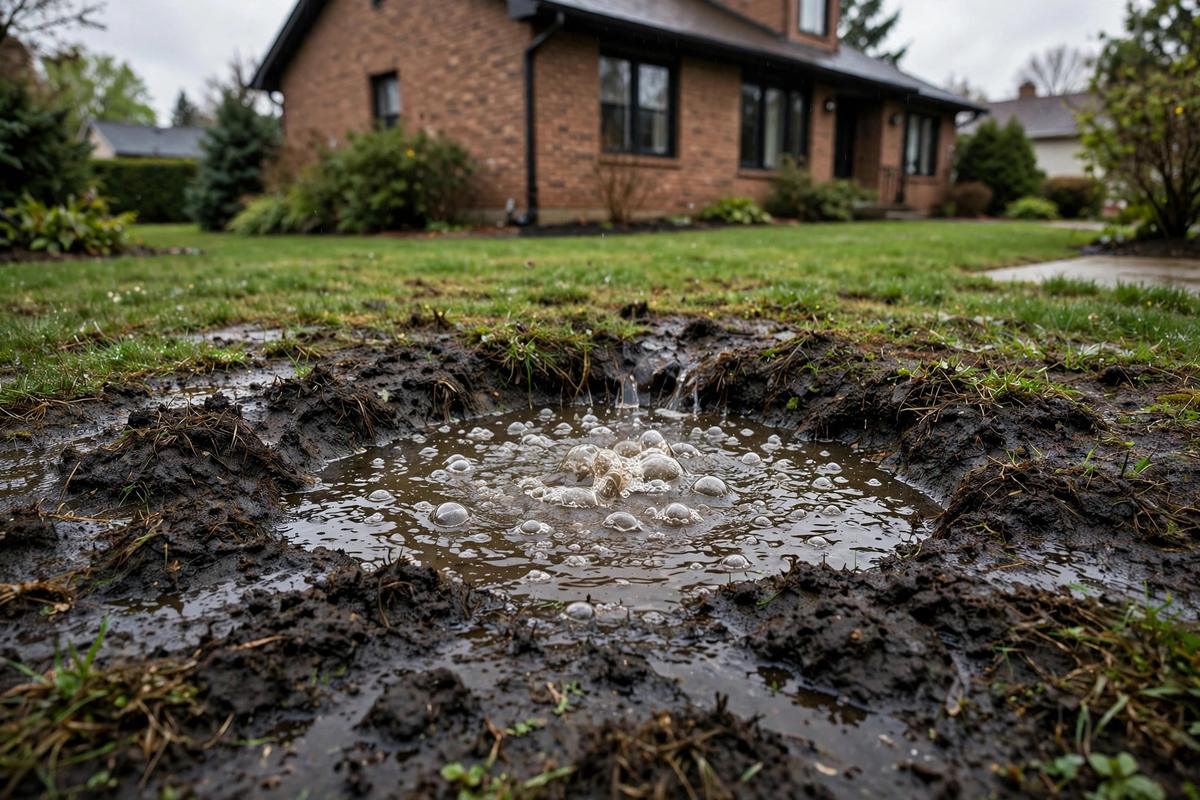
No single tool does it alone; the technician layers methods until they agree on a spot. Soil type, depth and background noise all affect how precise the result is, which is why locating is a skilled job rather than a gadget reading. The payoff is a dig in the right place, once.
Expect the visit to take a methodical path: confirm the meter reading, walk the likely route, listen at intervals and test sections in turn. It can feel slow compared with the urge to just dig, but every eliminated possibility narrows the excavation. Precision here is what keeps the repair small.
Leak on the service line or leak inside the house
Not every moving meter means a buried leak. A running toilet, a dripping tap or a water heater relief valve can all move the dial, so the pro rules out the indoor suspects first. Shut-off valves make this quick: with the indoor main valve closed, a meter that keeps moving points outside the house.
Once the leak is confirmed on the service line, the next question is whose side it is on. The homeowner usually owns from the meter, curb stop or property line to the house, but the split varies, so check with your water provider. A pro documents the location before anyone digs, so there is no argument about it later.
Calls answered 24/7
What happens after the leak is found
Finding the leak is the diagnosis; the fix depends on what the line looks like around it. A single failure in an otherwise sound line usually means a spot repair in one small pit. A line that is corroded along its length, or a second leak found while the first is being fixed, changes the conversation toward renewing the run.
That is often the moment homeowners meet old water service line replacement as a concept: the leak was the symptom, and the aging line is the condition. Either way, you get the findings explained in plain terms and pricing laid out before any repair work begins.
Whatever the fix, the detection report is worth keeping. It records where the leak was, what the surrounding pipe looked like and what the pro recommended. If another problem surfaces down the line, that record turns the next visit from a fresh investigation into a follow-up.
Elizabethtown homes: where hidden leaks turn up
In Elizabethtown borough, hidden leaks love the oldest lines. Pre-war service lines under narrow side yards and mature trees fail quietly at joints, and the first sign is often the water bill rather than a wet spot. For these homes, water line replacement in Elizabethtown Borough frequently starts with a detection visit that finds what the eye could not.
North of the borough, water line replacement in Conewago Township covers suburban streets and larger rural-edge lots where a leak can run for months in a back corner before anyone notices. Longer runs give water more places to escape unseen, which makes the meter test especially valuable out here. In the townships generally, freeze-thaw movement opens joints a little each winter, and sandy or rocky soils can carry leaking water away from the break, hiding the surface evidence.
We connect you with local pros who have traced leaks across all of these lots, from borough twins to township acreage. Technicians who know Elizabethtown homes read the era, the soil and the symptoms together, then find the spot without tearing up the yard to look for it.
While you wait for the detection visit
What helps, and what to leave alone
Do the meter test described above and note the result; it is the most useful thing you can hand the technician. Mark any wet spots or green strips with a garden flag or a stone so they are easy to find. Do not dig to investigate, and do not keep running water you do not need. If water is visibly rising or entering the house, shut off the indoor main valve and call (223) 243-0253.
Frequently asked questions
Start with the meter test: turn off all water in the house and watch the meter. If it moves, water is escaping somewhere. Shutting the indoor main valve narrows it further: a meter that keeps moving with the indoor valve closed points to the buried line outside. A pro confirms with listening and tracing equipment.
Yes, and it happens often. Sandy or rocky soil can carry leaking water down and away instead of letting it surface, and a small leak may simply never reach the grass. That is why the meter test matters more than your eyes: the meter sees what the lawn hides. Unexplained bill increases are the other giveaway.
No. Detection is non-invasive: listening at the meter and along the route, tracing the pipe's path and running pressure tests. Nothing is dug until the leak's location is marked. The only digging that follows is the repair excavation itself, kept to the marked spot.
Then you have still learned something valuable, because indoor leaks are usually simpler to fix. Running toilets, dripping taps and relief valves are the usual suspects, and the pro will point you to what was found. The detection visit rules the buried line in or out, which is the expensive question to answer.
Technicians narrow the leak to a small area, often tight enough for a single excavation. Soil type, depth and background noise affect precision, so no honest pro promises an exact inch. What locating reliably prevents is the alternative: digging up the yard to hunt.
If water is visibly leaking or pooling where it should not be, yes: turn off your indoor main shut-off. If the only evidence is a moving meter with no surface signs, you can usually leave the water on and simply avoid unnecessary use. When in doubt, call and ask; that is what the line is for.
Yes. A leak that runs around the clock adds up across a billing cycle, even if the flow seems minor. Many homeowners discover the leak through the bill long before they see any water. Finding it early keeps the whole episode as small as it can be.
That is the textbook hidden leak, and it is exactly what detection visits are for. Do the meter test once more to be sure nothing in the house is running, then call. The technician will trace the line and listen along it until the spot is found, even when the surface shows nothing.
Water line leak detection in Elizabethtown that finds it the first time
Stop guessing and start knowing. Call (223) 243-0253 and get the leak located before anyone picks up a shovel.
☎ Call (223) 243-0253 to track down your leakCalls answered 24/7 · Contractor explains pricing before work begins