Trenchless Water Line Replacement in Elizabethtown
For trenchless water line replacement Elizabethtown homeowners who want to save the driveway and the lawn, there is a low-dig option. We connect you with local pros who do this work on local soil and will tell you honestly whether your lot is a fit. Call (223) 243-0253 for a straight answer.
Serving Elizabethtown, PA, calls answered 24/7
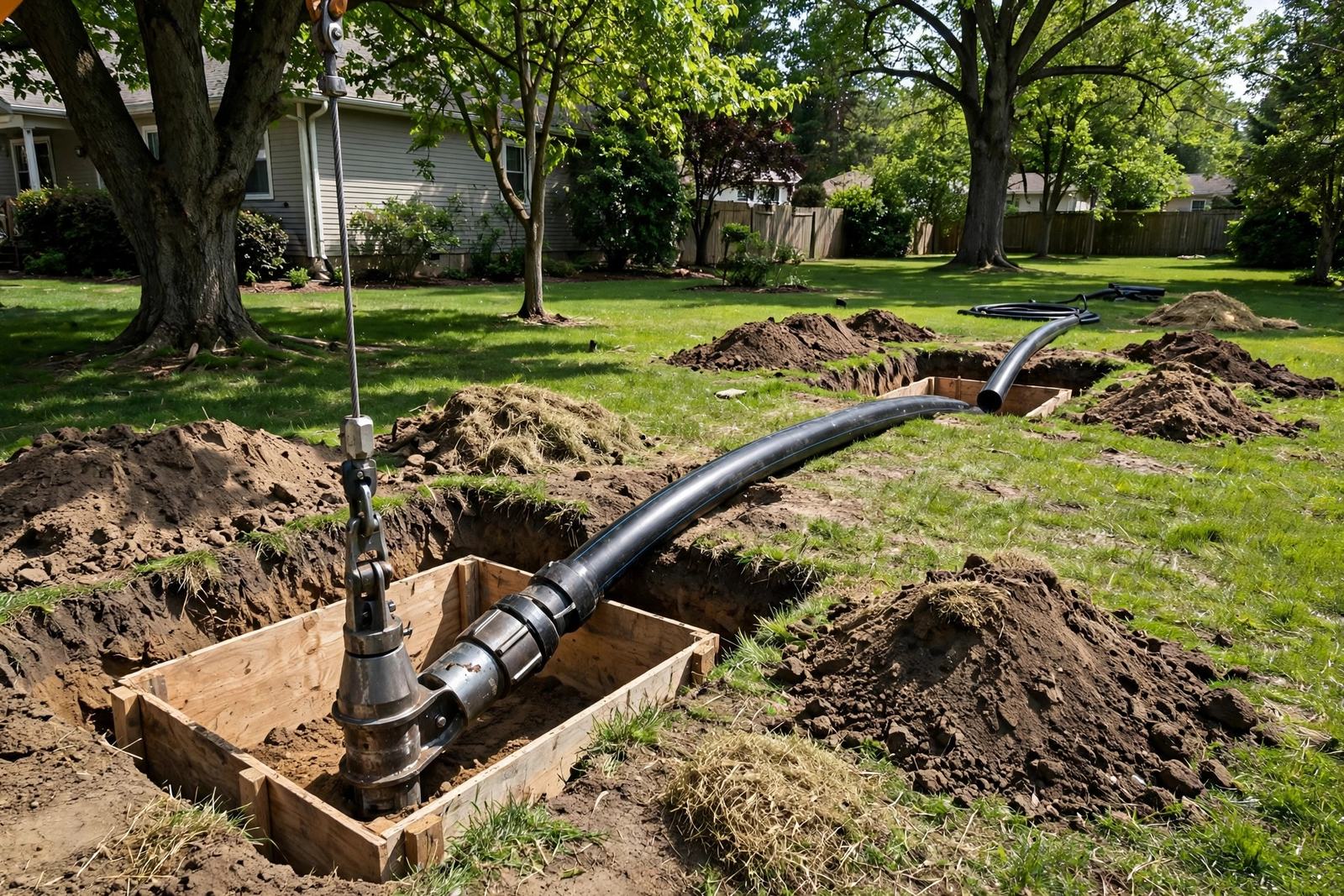
What trenchless water line replacement means for your service line
A water service line has to cross your property somehow, and the traditional way is an open trench from the street to the house. Trenchless water line replacement in Elizabethtown takes a different path: the new pipe is installed underground through small access pits, leaving the ground between them alone. Driveways stay whole, patios stay put and the lawn keeps most of its grass.
This is the method Elizabethtown homeowners ask about when the route crosses something they do not want disturbed. A long asphalt driveway in West Donegal Township. A brick walk and mature maple in the borough. A new patio poured last summer. We connect you with local pros who do this work on local soil and will tell you honestly whether your lot qualifies.
Calls answered 24/7
Trenchless in brief:
- Trenchless installs new pipe through small pits instead of one long trench.
- It suits lots with driveways, hardscaping, mature trees or long runs.
- It is not possible on every lot; soil and access decide.
Pipe bursting and directional boring, in plain language
Two trenchless methods cover most residential jobs. Pipe bursting pulls a new pipe through the path of the old one, breaking the old pipe outward as the new line takes its place. Directional boring drills a fresh path underground and pulls the new pipe back through it, which works even where the old line is too damaged to follow.
| Method | Good fit | Limit |
|---|---|---|
| Pipe bursting | Following the existing route with minimal new disturbance | Needs the old pipe's path to be traceable and passable |
| Directional boring | New routes under driveways, patios and plantings | Needs room to set up and steer the drill |
Both methods leave you with a continuous new line and far fewer joints than the pipe it replaces. Since joints are where old lines fail first, that reduction is a genuine improvement in its own right. The technician chooses based on your lot's soil, the condition of the old line and where the pits can go.
When trenchless water line replacement is a good fit, and when it is not
Trenchless shines where the surface matters: long driveways, decorative concrete, mature trees with root zones you want to protect and hillside lots where an open trench would be a grading headache. It is also the natural answer when the old line runs beneath a structure or planting you cannot move.
It is not universal, and an honest pro says so. Shallow bedrock, unstable soils, a collapsed line that cannot be followed and utility congestion can all rule it out. Tight lots with no room for access pits are another limit. Before any promises, the pro should locate the line, check the soil and confirm the pits will work, which is why the visit starts with the same locating and tracing approach used in water line leak detection work.
The honest version of the sales pitch is this: trenchless is a tool, not a miracle. On the right lot it saves the driveway, the patio and the garden in a way no open trench can match. On the wrong lot it is the wrong tool, and a pro who tells you that is doing you a favour.
Access pits: how many and where
Most residential trenchless jobs need two pits: one where the new line starts and one where it ends, typically near the street connection and at the house. A long or angled run can need a third pit in the middle. Each pit is just wide enough for the crew and equipment to work.
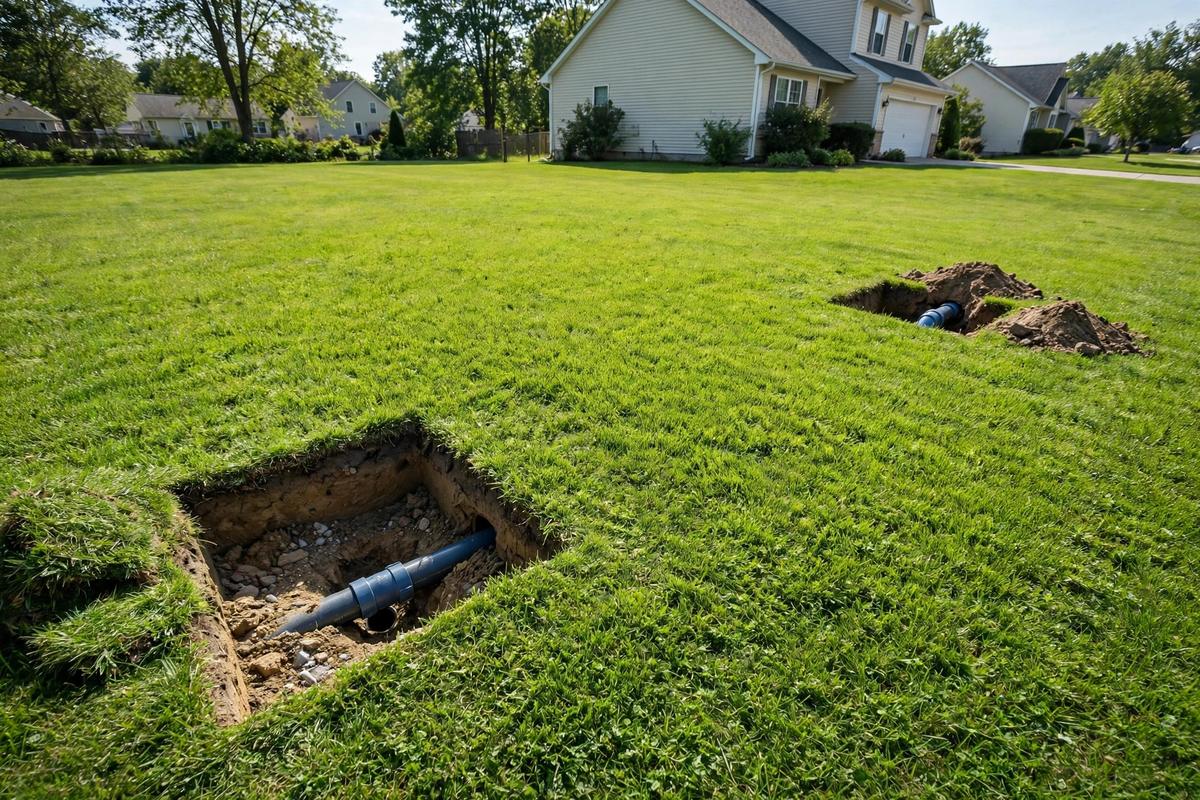
Placement is a conversation, not a surprise. The pro walks the lot with you and marks the pits where they do the least harm: off the prize flower bed, clear of the patio edge, away from the tree you care about most. After the pipe is in and tested, the pits are backfilled and the surface restored.
Calls answered 24/7
Hardscape, hillside and mature-tree lots
Some lots make trenchless not just attractive but obvious. A driveway that runs the full length of the property, a patio and walkway system installed over years, a hillside where an open cut would need serious grading to settle right. On these lots the access pits are a small price for leaving everything else alone.
Mature trees deserve special care. Boring or bursting beneath a root zone disturbs far less than trenching through it, but the pro still plans the path to give specimen trees the widest berth the lot allows. If you have plantings with real sentimental or landscape value, name them on the walkthrough so the plan protects them.
Rocky ground deserves a mention too. Parts of the townships sit on ground that fights digging of any kind, and that affects both methods. The site survey tells the pro what the equipment will meet, which is why the visit comes before any commitments, not after.
Elizabethtown homes: the lots where trenchless earns its keep
In Elizabethtown borough, the case for trenchless is written in brick and root. Narrow lots, mature trees between the houses and hardscaping added over decades make open trenching disruptive, and many of these homes are due for old water service line replacement as original lines reach the end of their useful years. Trenchless lets that renewal happen without tearing up what makes the lot charming.
South and west, water line replacement in West Donegal Township covers newer subdivisions and rural lots where long driveways and rolling grades are the norm; boring beneath a long stretch of asphalt beats cutting and repouring it. Around Milton Grove and Anchor, water line replacement in Milton Grove & Anchor reaches rural lots where the run from the road can be very long. On those properties the work is for homes on public water, and trenchless keeps the distance between the pits free of one continuous scar.
Technicians who know Elizabethtown homes have bored under these driveways and burst these old lines, and they know which soils cooperate and which fight back. You get straight answers on the phone, pricing explained by the contractor before work begins.
While you wait for the trenchless visit
Simple prep that helps the crew
Move cars off the driveway and clear the areas where pits may go. Note any sprinkler heads, buried pet fencing or landscape lighting along the likely route so the pro can plan around them. Keep pets indoors on the day of the work, and make sure there is clear access to the basement where the line enters. If you are on a rural lot, confirm the home is on public water when you call.
Frequently asked questions
No, and a trustworthy pro will say so when it is not. Shallow bedrock, unstable soil, a collapsed line that cannot be followed and utility congestion can all rule it out. So can a lot with no room for access pits. The site visit exists to answer this question before anyone promises anything.
There is no single answer, because the comparison depends on the lot. Trenchless uses specialised equipment, while open trench needs more digging and more surface restoration afterwards. On a lot with a long driveway or extensive hardscaping, avoiding that restoration can change the maths considerably. Ask for the comparison on your property, not in general.
Small compared with a trench: typically one pit near the street connection and one at the house, each just wide enough for the crew and equipment to work. A long or angled run can need a middle pit. They are backfilled and the surface is restored when the job is done.
That is exactly what it is for. Boring and bursting pass beneath driveways, walkways, patios and root zones without breaking the surface. The pro still plans the path to give valuable trees and structures the widest berth the lot allows.
The pipe going in is the same kind of new pipe used in open-trench work; the method of getting it underground does not make it weaker. What matters for longevity is the material, the quality of the joints and the installation. A continuous run with few joints is, if anything, one less thing to fail.
The usual blockers are shallow bedrock, soils that will not hold a bore, an old line too collapsed to follow and crowded underground utilities. Access is the other one: without room to dig pits at each end, the equipment has nowhere to work. The site survey identifies these before you commit.
It depends on the length of the run, the soil and the method chosen. Ask the technician what to expect for your lot rather than relying on a general figure. What you can count on is less restoration afterwards than an open trench would need.
Expect disturbance at the access pits and along equipment paths, not across the whole lawn. The ground between the pits stays untouched, which is the whole point of the method. The pits are backfilled, graded and restored when the work is finished.
Trenchless water line replacement in Elizabethtown, with an honest fit check
Find out whether your lot qualifies before you commit to anything. Call (223) 243-0253 and get a straight answer from someone who knows these properties.
☎ Call (223) 243-0253 to ask about trenchlessCalls answered 24/7 · Contractor explains pricing before work begins